
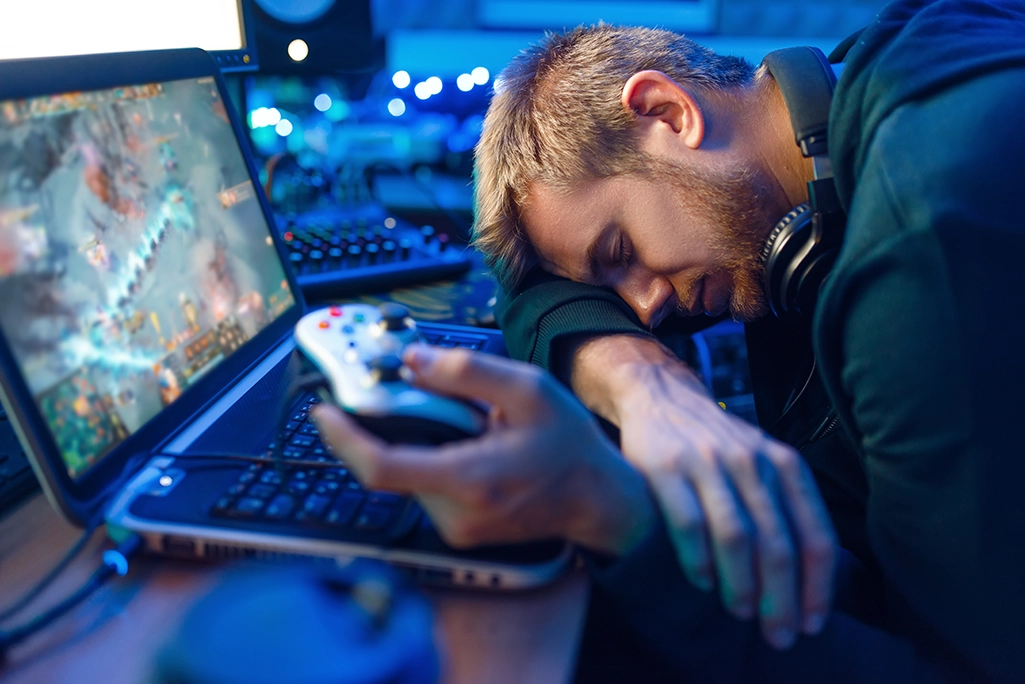
Mark’s mother called us last spring. Her 19-year-old son had dropped out of college, stopped seeing friends, and was gaming 12 to 14 hours daily. “He used to love hiking”, she told me. “Now he only leaves his room for food.”
Stories like Mark’s are becoming more common. What starts as a hobby can quietly evolve into something that consumes everything else.
Understanding Gaming Addiction
Video game addiction, clinically called internet gaming disorder, isn’t about enjoying games. It’s about needing them. The World Health Organization recognised it in 2019, and we’re seeing more families seeking help every month.
The games are designed to hook you. Variable rewards, social connections and escape from real-world stress, they hit the same brain pathways as other behavioural addictions. For someone struggling with anxiety or depression, the virtual world offers something the real one doesn’t: predictable success and social acceptance without vulnerability.
Warning Signs Parents and Partners Should Watch For
Not every gamer has a problem. But these patterns suggest something deeper is happening:
Preoccupation with gaming. They think about games when doing other things. Conversations drift back to gaming topics. They get irritable when they can’t play.
Withdrawal symptoms. When forced to stop, whether by parents, work or circumstances, they become restless, anxious or depressed. We’ve seen teens who describe physical agitation similar to substance withdrawal.
Tolerance builds. They need more gaming time to feel satisfied. What was a two-hour session becomes six, then ten.
Failed attempts to cut back. They’ve tried to reduce gaming, maybe even deleted accounts or sold consoles. But they always return.
Neglecting other life areas. Grades drop. Jobs are lost. Relationships suffer. Hobbies abandoned. The gaming takes priority despite knowing the consequences.
Deception. They lie about how much they play and hide screens or game secretly at night.
Using games to escape. Real problems feel overwhelming, so they retreat into the game world where they feel competent and in control.

Who’s Most at Risk?
We see gaming addiction across demographics, but certain patterns emerge. Teenage boys make up the largest group seeking treatment, though adult men and women are increasingly represented. People with underlying anxiety, depression, ADHD, or autism spectrum conditions seem more vulnerable, games provide structure and social interaction without the complexity of face-to-face relationships.
When to Seek Professional Help
If gaming is causing significant problems in work, school, relationships or health and the person can’t stop despite wanting to, it’s time to talk to someone. Early intervention matters. The longer the pattern continues, the more life opportunities are missed and the harder recovery becomes.
At The Grange, we treat gaming addiction as a serious behavioural health condition. Our approach combines cognitive behavioural therapy, family involvement and practical strategies for rebuilding a balanced life. We don’t demonise gaming, we help people restore choice and control.
We have more information on specifically video gaming addiction, which you can find here. We also have more information around how we approach therapy, which you can read more about here.
Next Steps
If you’re worried about yourself or someone you love, start with an honest conversation. No shame, no blame, just observation and concern. If that doesn’t lead to change, professional assessment can clarify what’s happening and what help is needed.
Recovery is absolutely possible. We’ve seen young people return to school, rebuild friendships, and rediscover interests they’d abandoned. The virtual world loses its grip when the real world becomes manageable again.